
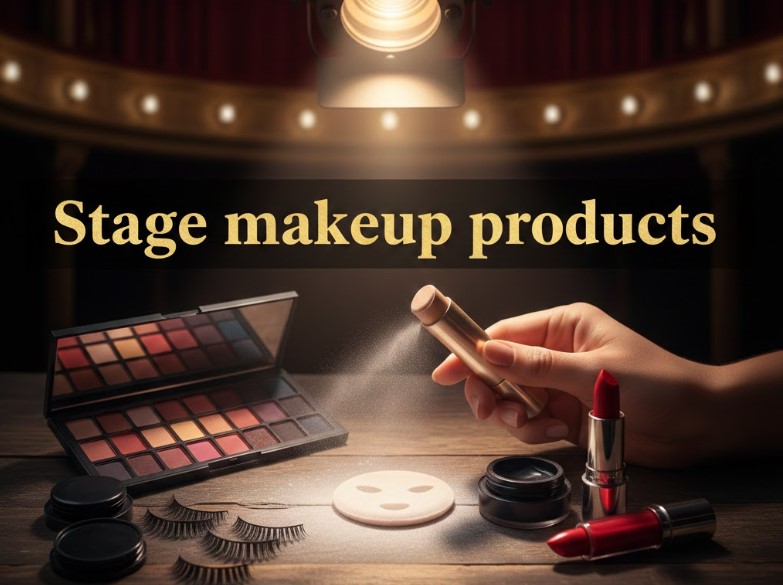
The choice of foundation and base layers is perhaps the most critical decision when assembling your collection of Stage makeup products. Unlike everyday cosmetics designed for natural light, stage lights requires a highly pigmented, full-coverage formula.
This is not the time for a sheer CC cream. You are looking for products that provide opacity and depth, restoring the dimensionality that bright lights strip away.
Professional theatrical brands often offer thick, cream-based foundations and ‘cake’ makeup, both of which are favorites among seasoned performers for their exceptional buildability and staying power.
The world of live performance, be it theater, dance, or public speaking, places unique demands on cosmetics. Achieving a look that translates across the footlights and captivates an audience in the last row requires specialized tools and techniques.
Therefore, understanding the distinct category of Stage makeup products is the absolute first step for any performer looking to master their on-stage appearance. These products are engineered for extremes; extreme lighting, extreme heat, and the extreme demand for lasting perfection.
This comprehensive guide will illuminate the must-have items for your performance kit, ensuring your features are never washed out and your look remains flawless from opening curtain to final bow.
The Foundation of Flawless Performance with Base Stage Makeup Products
The invisible work that goes into preparing a performer’s skin is arguably as crucial as the dramatic colors applied later.
A robust base ensures that the entire look not only survives the rigors of the stage (intense heat, sweat, close proximity to fellow actors, and rapid costume changes), but also guarantees that the highly contrasted colors applied later adhere smoothly and remain true to tone.
The choice of foundational Stage makeup products dictates the overall longevity and professional appearance of the character from the audience’s perspective. Think of this phase as laying the structural steel for a skyscraper; without a strong base, everything else will eventually crumble under pressure.
High-Performance Primer: The Sweat and Oil Barrier
The application of a high-performance primer is a non-negotiable step in the regimen of any performer using professional Stage makeup products.
This step is often overlooked by novices who are accustomed to daily makeup, but its purpose under theatrical conditions is absolutely vital. Stage lights, particularly older incandescent fixtures, generate tremendous heat, causing performers to perspire heavily.
Furthermore, the intensity of performance, including dancing and vigorous movement, only exacerbates the challenge of maintaining a matte and non-slippery surface.
A specialized theatrical primer is formulated to create a durable, tenacious, yet breathable barrier between the skin and the heavy cream or cake foundation.
Look specifically for mattifying and oil-free formulas, often featuring silicone-based ingredients, which work to blur texture, minimize the appearance of large pores, and, most importantly, provide a “grip” for the makeup.
By managing oil and sealing the skin, the primer significantly extends the life of the entire application, preventing the foundation from breaking down into patches or sliding off the face mid-scene, thus preserving the integrity of the overall stage illusion.
Full-Coverage Foundation: Recapturing Facial Dimension
The foundation you choose is the heart of your Stage makeup products kit, as it serves two primary functions: evening out the complexion and, critically, combating the visual flattening caused by direct stage lighting.
Standard high-definition foundations often lack the necessary opacity and pigment concentration to withstand the aggressive washout effect of intense spotlights. Therefore, professional foundations are typically cream-based or ‘cake’ (water-activated) formulas, boasting extremely high pigment load.
Performers often select a shade that is one to two shades darker and slightly warmer than their everyday tone. This subtle darkening ensures that the face retains a healthy, vital look, rather than appearing pale or monochromatic under the high-key lighting.
The thick, buildable nature of cream foundations allows for precise, heavy coverage capable of concealing skin imperfections, beard shadows, or tattoo cover-up, all while providing a uniform base ready for exaggerated contouring.
The key to successful application is even distribution across the face, neck, and behind the ears, ensuring no visible lines of demarcation, an essential detail that can be glaringly obvious under the theatrical glare.
Industrial-Strength Concealer: Target Practice for the Spotlight
In the context of Stage makeup products, concealer is not merely a touch-up tool but a focused weapon used to neutralize and camouflage specific high-contrast issues that would otherwise be amplified by the bright lights.
Dark circles under the eyes, prominent blemishes, redness, and veins are all details that an audience will spot from a distance if not properly addressed. Due to the cool, sometimes harsh quality of stage lighting, undereye shadows can often appear purple or blue.
This requires the use of color-correcting concealers, typically in yellow, peach, or orange hues, which are applied before the main foundation layer to neutralize the unwanted tones. For spots and redness, a high-coverage, creamy formula is dabbed on and blended precisely.
The rule of thumb for stage concealer is maximum coverage with minimum product bulk. Applying the foundation and then following with targeted, precise concealer application ensures that the base layer is seamless, allowing the performer to convey emotion through their eyes and facial expressions without distraction from unwanted shadows or discoloration.
Colorset Setting Powder: The Lock and Matting Agent
The final and most indispensable step in preparing the base with Stage makeup products is the liberal use of a professional setting powder, often referred to as “colorset” or “translucent” powder.
This product serves as the ultimate seal for the heavy cream foundations used on stage. Because cream makeup is oil-based and therefore prone to movement, smudging, and shine, it requires a significant amount of powder to fully transition it into a matte, immovable state.
Performers typically use a large, fluffy brush or a powder puff to press, rather than sweep, a generous layer of translucent powder all over the face, a technique often called “baking” in high-coverage makeup artistry.
The powder absorbs any residual oil, eliminates the reflective quality of the cream base (which would otherwise cause a distracting glare under spotlights), and chemically locks the makeup into place.
A quality translucent powder will not alter the foundation color, but merely render the entire base completely matte and transfer-proof.
This protective layer is what allows the base to endure the combination of sweat, costume friction, and intense lighting for the duration of the performance, ensuring the performer’s features remain perfectly sculpted and visible until the curtain closes.
Contouring and Color: Defining Features with Stage Makeup Products
On a large stage, subtlety is the enemy of visibility. Features must be deliberately exaggerated to be read clearly by an audience situated dozens of feet away. This is where contouring and color application truly distinguish Stage makeup products from everyday cosmetics.
Contour and Highlight: Sculpting for Visibility
Under powerful stage lighting, which often projects directly from above or head-on, the natural shadows and highlights of the face are flattened and washed out, making the performer appear two-dimensional and masked.
The purpose of contouring is to restore and exaggerate this three-dimensionality, ensuring the bone structure (the cheekbones, jawline, and eye sockets), remains visible from a distance. The choice of Stage makeup products for contouring must be a matte powder or cream that is at least two to three shades deeper than the base foundation.
More importantly, the contour shade should be neutral or slightly cool-toned to mimic a true shadow; warm or orange tones (which often function as bronzers in daily makeup) will appear muddy or dirty on stage.
The application must be heavy and placed precisely: beneath the cheekbones, along the sides of the nose, and under the jawbone. Highlighting, applied to the tops of the cheekbones, the brow bone, and the center of the face, works in opposition, bringing those areas forward.
While a very subtle satin highlight can be used, heavy glitter or highly reflective shimmer should be strictly avoided, as these can create a distracting, blinding flash under the spotlights, pulling focus away from the performance itself.
Bold Blush (Rouge): Injecting Vitality
Stage lights are notorious for draining the life and color from a performer’s complexion, making them appear pale, sickly, or overly monochromatic despite the heavy foundation. Blush, or ‘rouge,’ is a vital component of Stage makeup products used to re-inject essential color and vitality, ensuring the performer looks healthy and expressive.
Because the color payoff is diminished by the intensity of the lights, the blush used must be highly pigmented and vibrant. Shades like intense rose, deep berry, or vivid peach are ideal, far surpassing the soft tones of daily wear.
Furthermore, the application is far more generous than for everyday use. It is typically swept across the apples of the cheeks and blended firmly upward toward the temples to achieve a lifting and defining effect that reads strongly from the audience.
The choice of blush color must also be considered in relation to the costume, character, and the specific lighting design (e.g., warmer lights might necessitate slightly cooler blush tones to maintain balance), making it a truly strategic element of the performance look.
The Defining Art of Tightlining and Waterlining
While seemingly minor, the use of eyeliner on the inner rims of the eyes is a highly effective technique among Stage makeup products for achieving maximum eye definition without heavy, distracting lines.
Tightlining, specifically, involves using a dark, waterproof pencil or gel liner to fill in the sparse spaces between the upper lashes and the actual inner rim of the eyelid. This simple step creates the illusion of much thicker, fuller eyelashes and makes the lash line appear denser.
Waterlining the lower rim, typically with a black or deep brown liner, is a classic stage technique that significantly intensifies the eye’s shape, ensuring that the performer’s expressive gaze is not lost in the shadows cast by the heavy stage lights.
Because the inner rim is a moist area, the chosen liner must be highly tenacious and waterproof to prevent smudging or running, which could ruin the entire base makeup or cause irritation mid-performance. This subtle, powerful technique adds depth that complements the dramatic outer eyeliner.
Powder vs. Cream Formulas: Strategic Choice
In the world of Stage makeup products, the choice between powder and cream formulas for color application (contour, blush) is strategic and depends heavily on the production’s demands.
Cream formulas, typically applied directly over a cream foundation base before it is set, offer the most intense and durable pigment saturation.
They are often favored for roles requiring high definition or extreme durability, such as complex character work or physically demanding dance routines, because they melt seamlessly into the foundation and resist sweat better than powders.
However, creams must be set very carefully with powder to prevent creasing and transferring. Powder formulas, on the other hand, are applied after the base foundation has been fully set with a generous layer of setting powder.
They are preferred for their ease of blending and layering over a large area, making them excellent for quick changes or when performers need to build up color incrementally. Professional kits often include both (a cream base for intense sculpting and a powder top layer to set, deepen, and refine the look), maximizing the benefits of both durability and blendability.
Dramatizing the Eyes: Key Stage Makeup Products for Expression
The eyes are the windows to the soul, and on stage, they are the primary conduits for emotion. Eye makeup must be powerful enough to convey feeling, nuance, and character to the back of the auditorium, ensuring that every glance and flicker of expression is captured by the audience.
Eyeshadow Palette: Achieving Maximum Depth
To prevent the eyes from receding into the shadows cast by heavy stage lighting, eyeshadow application must be aggressive and highly contrasted. The ideal eyeshadow palette for Stage makeup products should feature an array of rich, matte, and highly pigmented colors.
Matte finishes are preferred over shimmers or metallics for the primary contouring shades because they absorb light, thereby creating deeper, more dramatic, and more realistic shadows in the crease and outer corner of the eye.
Essential shades include deep blacks, charcoal grays, and true matte browns, which are used generously to define the eye socket and create a powerful sense of depth and dimension.
This deep color should be extended well beyond the natural eye socket, sometimes up toward the brow bone, to ensure the definition is visible from the furthest seats.
Conversely, a lighter, often neutral or slightly bright white shade is applied to the mobile eyelid and the inner corner to create maximum contrast. This contrast is the key to making the eyes appear larger, more forward-set, and brighter, ensuring the audience can read the emotion in the performer’s gaze.
Eyeliner: The Bold Framework
Eyeliner acts as the essential framework, providing the necessary definition to ensure the shape of the eye is never lost, even when the performer is in motion or under complex lighting. For stage work, the eyeliner must be thick, dense, and intensely black (or a deep character-appropriate color).
Liquid or gel formulas are overwhelmingly preferred over traditional pencils because they deliver a sharper, more opaque line that will not easily smudge or fade due to heat and perspiration.
The application technique is often exaggerated, typically involving a bold line along the entire upper lash line that often culminates in a sharp, noticeable wing or cat-eye shape, which helps to elongate and lift the eye when viewed from afar.
For roles demanding extraordinary drama, the eyeliner may even be extended into the lower lid to create a full, smoky frame.
The permanence of the liner is critical; therefore, performers rely on waterproof or theatrical formulas specifically designed for longevity under extreme conditions, cementing the liner as a high-performance cornerstone of Stage makeup products.
False Eyelashes: Instant Volume and Dramatism
False eyelashes are arguably one of the most effective and universally used Stage makeup products for instantly increasing eye visibility and dramatic impact. Stage lighting tends to wash out natural lashes, making the eyes appear bare and undefined.
The addition of dense, multi-layered, and often quite long false lashes solves this issue by creating an artificial, deep shadow line that frames the eye and ensures a captivating gaze, even from the balcony.
Unlike natural-looking daily lashes, stage lashes are chosen for their exaggerated volume and length, often featuring clustered, crisscrossed, or stacked hairs.
Performers must also choose a strong, long-lasting adhesive that can withstand the heat and humidity of a live performance.
The sheer size and depth added by the lashes act as a powerful visual cue, enhancing the performer’s ability to communicate expressively without relying solely on facial movements that might be too subtle to read at a distance.
Brow Products: Anchoring Facial Expression
The eyebrows are the structural anchors of all facial expressions; they convey shock, anger, joy, and sadness, and their visibility must be absolute. Therefore, robust brow products are essential Stage makeup products.
Thin, pale, or undefined brows will simply disappear under the lights, leaving the face looking incomplete and emotionally flat. Performers rely on highly pigmented pomades, gels, or hard pencils to fill in, darken, and sculpt the brows into a bold, distinct shape.
The color used should be a shade or two darker than the performer’s natural hair color to ensure maximum impact, and the shape is often exaggerated, sometimes made thicker or more arched than is typical for daily wear.
Once filled and shaped, a strong brow gel or wax is used to set the hairs in place, ensuring the meticulously crafted shape holds perfectly throughout the performance, providing a clear and powerful frame for the highly-defined eye makeup beneath it.
The Final Seal: Waterproof Mascara
While false lashes provide the main volume, a coat of rich, volumizing, and intensely black mascara is still required.
Mascara serves a dual purpose: first, it binds the performer’s natural lashes seamlessly to the base of the false lashes, making the integration look professional and flawless; and second, it provides an additional coat of color and depth to the lower lashes.
For stage use, the formula must be waterproof and smudge-proof. Given the proximity of mascara to the tear duct and the high probability of sweat or even emotional tears during a performance, a non-waterproof formula is a serious risk that could lead to distracting smears under the eyes.
By making use of a high-quality, long-wear mascara, the performer ensures the entire eye area remains locked in place, maintaining the dramatic focus on their eyes from the beginning to the end of the show.
Stage Makeup vs. Everyday Makeup: The Crucial Difference
The distinction between everyday cosmetics and professional Stage makeup products is profound, revolving primarily around pigment intensity, durability, and the intended viewing distance.
Using one in place of the other is a common novice error that can severely compromise a performer’s visibility and impact.
Pigment Intensity: The Visibility Requirement
The most significant difference lies in pigment intensity. Everyday makeup is formulated with a moderate pigment load, designed to provide subtle coverage and blend naturally into the skin under normal, diffused light (like daylight or standard indoor lighting).
The goal is natural enhancement. Stage makeup products, conversely, are engineered with an extremely high concentration of pure color pigment.
This hyper-pigmentation is absolutely essential because stage lights are powerful and often highly saturated (e.g., strong blues, reds, or whites). These lights have a dramatic washing-out effect, significantly diminishing any color that is not intensely saturated.
If a performer uses daily foundation, the light will render their face pale, two-dimensional, and largely indistinguishable to the audience.
Stage makeup is designed to be visually impactful from dozens of feet away, meaning the colors will appear stark and almost garish up close, but perfectly vibrant and balanced under the footlights.
Formula Focus: Durability vs. Comfort
The core engineering priority of the makeup formula differs dramatically between the two categories. Everyday cosmetics prioritize comfort, lightweight wear, and a natural finish (such as dewy or satin), aiming to feel invisible on the skin for up to 8 to 10 hours under normal, temperate conditions.
Stage makeup products, however, prioritize maximum durability, full coverage, and a matte finish, often sacrificing a degree of lightness for tenacity. Stage performers are subjected to intense heat from lighting rigs and the physical exertion of performance, leading to heavy perspiration.
Therefore, theatrical products are formulated to be heavy-duty that’s designed to lock down onto the skin and resist melting, creasing, or sliding off. Their longevity goal is not just to last many hours, but specifically to withstand extreme physical and environmental stressors without requiring reapplication.
Finish and Light Reflection: Matte is Mandatory
The finish of the makeup determines how light interacts with the face, making it a critical distinguishing factor. Most popular everyday makeup trends favor finishes like dewy, satin, or slightly luminous to give the skin a healthy, youthful glow in natural light.
This luminescence is highly problematic on stage. Under bright, focused spotlights, any amount of shine or shimmer will turn into a distracting, bright reflection or ‘hot spot’ that obscures the performer’s features.
Consequently, virtually all foundational Stage makeup products must be completely matte. The matte finish absorbs light rather than reflecting it, which is crucial for the dramatic effects of contouring and ensures that the strategically placed highlights and shadows remain clean and defined, allowing the audience to clearly read the performer’s carefully sculpted bone structure and expressions.
Application Technique: Exaggeration vs. Subtlety
The application goals are fundamentally opposite. Everyday makeup application is all about subtlety and blending, aiming to enhance natural features so that the makeup itself is barely perceptible up close.
The goal is to look like the best version of one’s natural self. Stage makeup products, conversely, demand deliberate exaggeration. The features (the eyes, cheekbones, and lips) must be over-dramatized because distance and lighting flatten the face and diminish color.
What looks like a stark, overly intense contour line or a drastically large eyeliner wing up close is precisely what is needed to ensure the features are clearly visible, and the character’s expression is readable from the back row of a large theatre.
In stage makeup, if it looks ‘right’ up close, it almost certainly looks ‘washed out’ or ‘invisible’ on stage. The artist must continually ask, “Will this color and shape translate to the distance?”
Conclusion
A stage performer’s makeup kit is a carefully curated arsenal of high-power, long-wear products. Each item is chosen not for its subtlety, but for its ability to create a bold, expressive face that can communicate emotion and character across the barrier of the auditorium.
By prioritizing high-pigment foundations, deep contours, bold eye definition, and powerful setting formulas, you ensure your Stage makeup products will deliver a show-stopping look every single time you step into the spotlight. Master this art, and you will not only look the part, but you will also give your audience the gift of seeing your character, clear and vibrant, no matter where they sit.